
“I should practise more.”
— Me, in perpetuity.
Musicianship is a craft that can take a lifetime of discipline to master. For people who have ADHD (like me), practising can border on Sisyphean, with no 70-star milestone to help reach the summit.
Over the years of being a musician and music instructor, I’ve found tricks to help me find focus, motivation and purpose while practising. No two brains are alike, but these tips have helped me form fun, rewarding practice routines. I hope they’ll help you too.
Out of the case and in your face
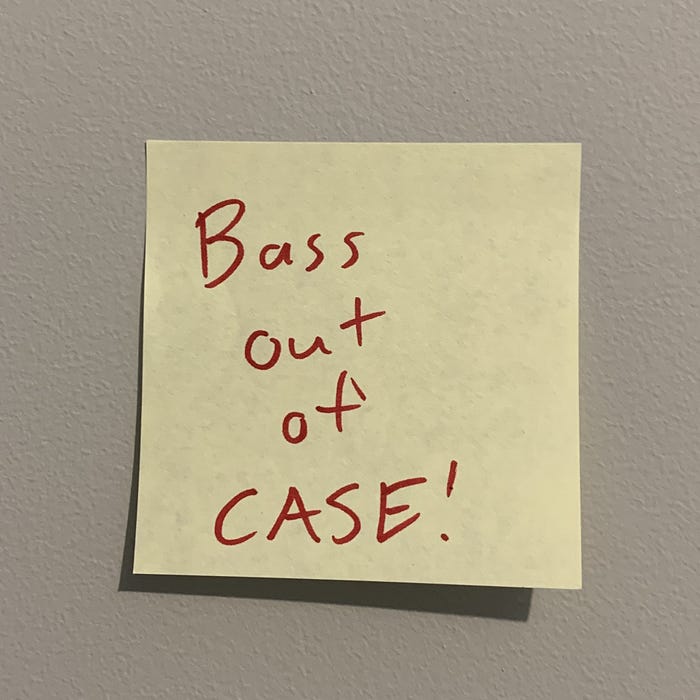
Let’s start with an easy one. When you get home from a lesson, rehearsal, or gig, take your instrument out of its case and make sure it’s not only visible, but plugged in and ready to play.
The mental barrier that a few metal clasps on a plastic shell can create is incredible. I’ve gone weeks at a time just walking past my bass in its case, never bothering to attempt the Herculean task of taking it out.
The term for this concept is object constancy, but you may know it as out of sight, out of mind. It’s the same reason many people with ADHD forget to pay bills, take medication, or other seemingly simple tasks.
Have your instrument handy and it’s more likely to end up in your hands.
Talk to your teacher about it

Don’t feel like you need to figure this all out on your own. Your teacher should be able to adjust lesson plans and teaching styles, as well as help you set up healthy practice habits that work for you.
Remember: your guitar lessons (or any other music lessons you take) are yours. They need to be catered to what you enjoy and what sets you up for success.
I was diagnosed as an adult, and spent a fair bit of time floundering in my earlier music education because I didn’t know that my brain worked differently. I never considered that I’d need to ask for help, and thought that I was just lazy and uncommitted. Not a fun feeling!
I strongly encourage everyone who has (or suspects they have) ADHD to speak up about it and get accommodations where possible.
If you’re a musician with ADHD, I’d love to hear from you to share your experiences and practice strategies!
Practise unplugged
If you’re easily distracted like me, practising can be the last thing on your mind when your phone is buzzing, TV is glowing, and the vast expanse of the internet is serenading you with its sweet siren song. Set yourself up for success by disconnecting from the internet and removing distractions from your practice space.
There’s one small caveat: many practice tools are tied to our devices. If you use your phone as a metronome or tuner, or if your tablet contains your sheet music, download the apps and charts locally so you can use them offline.
In summary: Airplane mode good.

Develop a dopamine-friendly routine
Don’t forget — playing music is fun! And while that’s not always the case with practising, there are ways we can trick our brain into thinking it is.
Prepare a written checklist of what you want to accomplish during each session. Not only does it help give structure to your session, but crossing items off your list releases dopamine, making you happy and motivated.
Cook up an appetizing practice sandwich
Before and after getting to the meat (or Beyond Meat for the veggie crowd) of your practice, pad it with some soft, delicious buns. It will make it a lot easier to handle.
I like to start and end my sessions by playing songs. For a warmup, I’ll play something I enjoy, but is not necessarily in line with what I’m practising that day. This gets my fingers moving and gives me satisfaction when I nail passages, even if I’ve had them down for years. The dopamine release gets me in the right headspace.
After my practice, I usually spend a bit of time working on a song for my next rehearsal or gig as a fun reward.
Practise practising
Forming new routines isn’t easy. Like improving at your instrument, it takes commitment and consistency. To make adapting these habits easier, it’s important to practise them (I can hear your disappointed groans).
Shave five minutes off your playing time and dedicate it to practising practising. Make a conscious effort to set up your instrument in a convenient location, check up on your checklist, get your tools/apps ready offline, and insulate yourself from distractions. Investing a bit of time upfront will pay dividends in the long run.

Okay, enough talk — let’s all go practise.
 Morrison Music
Leave a comment